The role of a Chief Technology Officer varies depending on the type, size, and stage of a business. Different stages of the growth of a company bring about changes in the way a CTO works. A startup CTO is usually an entirely different person from the CTO of a large enterprise — the expectations, the day-to-day, and the challenges shift radically as the company grows.
In this article, I'd like to talk about what changes in the role as the company goes through different stages, and what it takes to navigate these transitions. I've experienced several of these stages firsthand and have talked to many CTOs who have gone through the same.
What is the Role of a CTO in a Tech Startup?
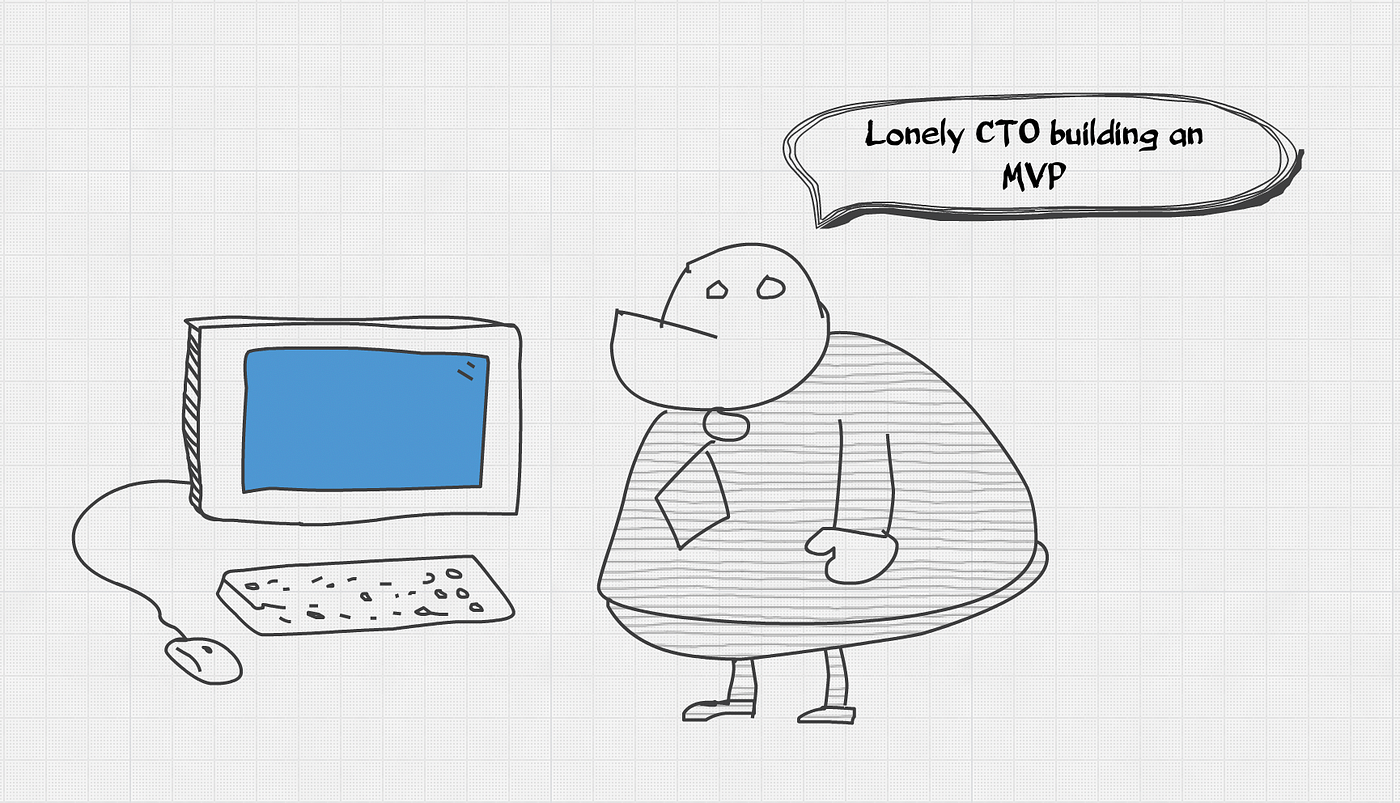
A startup CTO is first and foremost a builder. In the earliest stages, the CTO might be the only technical person in the company. They are writing the code, deploying the infrastructure, choosing the tech stack, and probably also fixing the printer.
At this stage, the CTO's primary responsibility is to build the MVP — the Minimum Viable Product. Speed matters more than perfection. The CTO must make pragmatic choices about technology, cutting corners where appropriate while not accumulating crippling technical debt.
Key responsibilities at this stage:
- Building the product — writing code, deploying, maintaining infrastructure
- Choosing the tech stack — making technology decisions that balance speed, cost, and future scalability
- Being a generalist — handling everything from frontend to backend to DevOps to security
- Hiring the first engineers — finding the right people who can thrive in chaos
The most important quality of a startup CTO is the ability to ship. You don't need the perfect architecture — you need something that works, that users can touch, and that you can iterate on. Everything else is secondary.
What is the Role of a CTO in a Scale-Up?
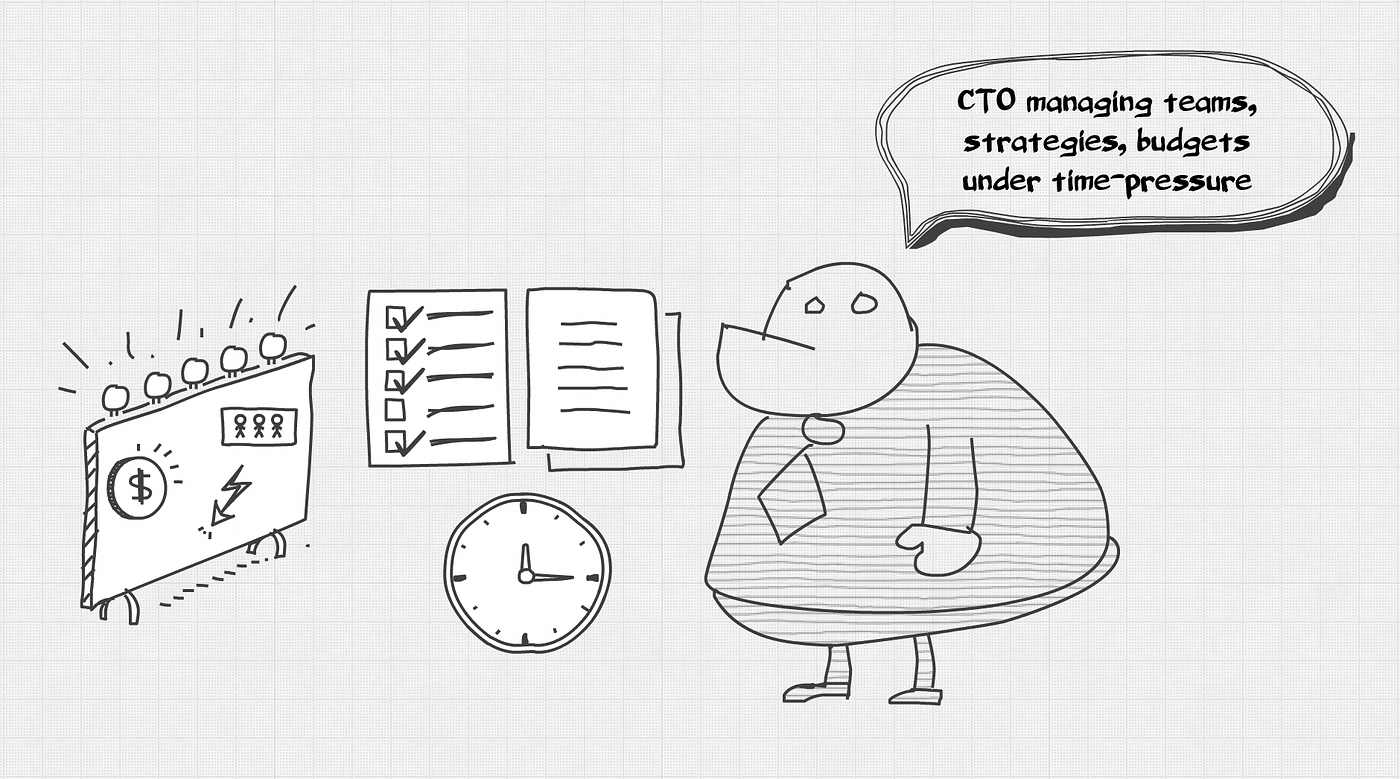
This is perhaps the most challenging transition. The company has found product-market fit, revenue is growing, and suddenly the team needs to scale from 5 engineers to 50. Everything that worked before starts breaking.
The CTO's role shifts from primarily building to primarily enabling. You still write code, but less and less of it. Instead, you're spending your time on:
- Hiring and team building — recruiting engineers, building teams, establishing engineering culture
- Process and structure — introducing code reviews, CI/CD, sprint planning, and other practices that feel like overhead but become essential at scale
- Architecture for scale — the MVP architecture won't hold. The CTO needs to plan and execute the transition to systems that can handle 10x or 100x the load
- Technical leadership — setting standards, mentoring senior engineers, and making sure the team is aligned on technical direction
The hardest part of this transition is letting go. The CTO can no longer be the best engineer on every project. They need to hire people who are better than them in specific areas and trust those people to deliver. This is psychologically difficult for many technical founders.
Another challenge is the "founder's code" problem. The codebase that the CTO built in the early days often becomes the biggest source of technical debt. The CTO needs to be humble enough to let the team refactor or even rewrite their own code.
What is the Role of a CTO in a Mid-Sized Company?
At this stage, the company typically has 100–500 employees, with an engineering team of 30–150 people. The CTO is now firmly in a leadership role. Day-to-day coding is rare, if it happens at all.
The CTO's focus shifts to:
- Engineering strategy — aligning technology decisions with business goals, managing the technology roadmap
- Organizational design — structuring engineering teams (platform, product, infrastructure), defining roles and career paths
- Cross-functional collaboration — working closely with Product, Design, Sales, and other departments
- Vendor and partner management — evaluating build vs. buy decisions, managing relationships with technology vendors
- Security and compliance — as the company grows, so do the regulatory and security requirements
The CTO at this stage needs to be an effective communicator. They need to translate business requirements into technical strategy and vice versa. They need to explain complex technical concepts to non-technical stakeholders and advocate for engineering needs at the executive level.
One of the biggest risks at this stage is becoming disconnected from the technology. The CTO who doesn't understand what the team is building, how they're building it, and what challenges they face will quickly lose credibility and effectiveness.
What is the Role of a CTO in Large Enterprises?

In a large enterprise (500+ employees, 150+ engineers), the CTO role becomes almost entirely strategic. The CTO is a member of the C-suite, reporting to or working alongside the CEO, and their decisions impact hundreds or thousands of people.
Key responsibilities include:
- Technology vision — defining the long-term technology direction of the company
- Innovation — identifying emerging technologies and evaluating their potential impact on the business
- M&A due diligence — evaluating the technical aspects of potential acquisitions
- Board and investor relations — presenting the technology strategy to the board, answering technical questions from investors
- Risk management — managing technology risk, disaster recovery, business continuity
- Budget management — managing a significant engineering budget, making allocation decisions
At this level, the CTO needs to be a strategic thinker first and a technologist second. They need to understand market trends, competitive dynamics, and business strategy. They need to build and maintain relationships with other executives, board members, and key stakeholders.
The CTO of a large enterprise often doesn't write code at all. They might not even review code regularly. Their value comes from their ability to set direction, build the right organization, and make the right strategic bets.
What is the Role of a CTO in a Consultancy/Software Agency?
The CTO role in a consultancy or software agency is unique because the company builds products for others, not for itself. This creates a different set of challenges and priorities.
The CTO in this context focuses on:
- Technical excellence — ensuring the team delivers high-quality work across multiple clients and projects
- Technology standardization — creating reusable frameworks, templates, and best practices that can be applied across projects
- Client-facing technical leadership — serving as the technical authority in client relationships, participating in pre-sales, and setting expectations
- Talent development — building a team of versatile engineers who can work across different technologies, domains, and client environments
- Innovation and R&D — staying ahead of technology trends to ensure the company can offer cutting-edge solutions
The agency CTO often needs to be more hands-on than their counterparts in product companies, because they need to maintain credibility with clients and be able to step in on any project if needed.
How important is it for a CTO to be hands-on?

This is one of the most debated topics in the CTO community. My take: it depends on the stage.
In a startup, being hands-on is non-negotiable. You're building the product. If you can't code, you can't be a startup CTO.
In a scale-up, you should still be able to jump into the codebase when needed. You don't write code every day, but you review it, you understand it, and you can debug production issues when things go wrong.
In a mid-sized company, being hands-on means understanding the technology deeply enough to make informed decisions and challenge your team constructively. You might write a proof of concept occasionally, but your hands-on time is limited.
In a large enterprise, being hands-on is about staying curious and technically informed. You might tinker with new technologies in your spare time, but your day job is strategy and leadership.
The key insight is that "hands-on" doesn't mean "writing production code." It means staying close enough to the technology to maintain credibility, make good decisions, and earn the respect of your engineering team.
Conclusion
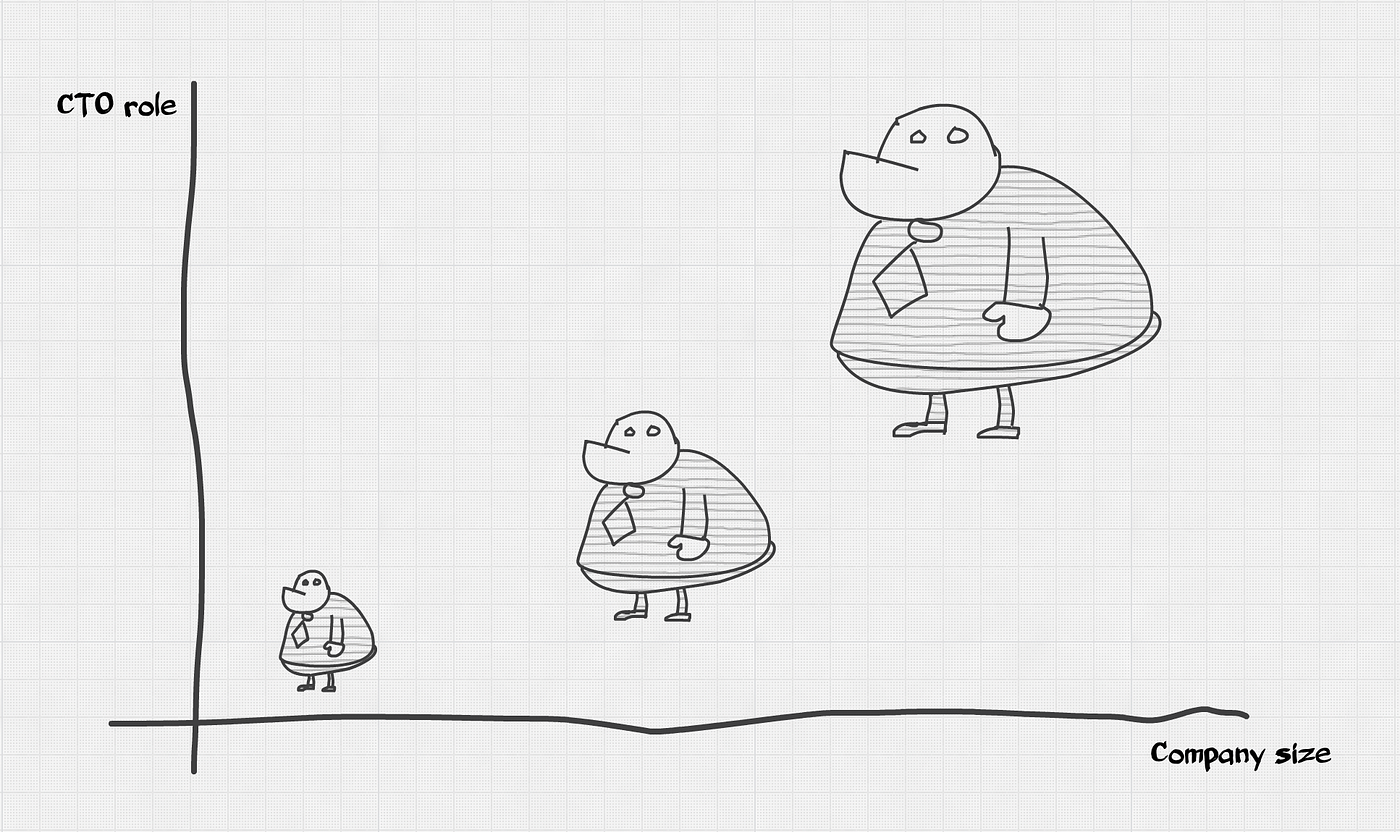
The CTO role evolves dramatically as a company grows. The skills that make you a great startup CTO — speed, hands-on coding, generalist knowledge — can actually become liabilities if you don't adapt as the company scales.
The most successful CTOs I've seen are the ones who recognize that their role needs to change and who actively work on developing new skills at each stage. They go from builder to enabler to strategist, and at each transition, they let go of what made them successful before and embrace what's needed next.
Not every CTO can or should make every transition. Some are happiest and most effective in the early stages, building products from scratch. Others thrive in the complexity of a large organization. There's no shame in knowing where you're at your best.
What matters is being honest with yourself about where you are, where your company is going, and whether you're the right person to lead the technology through the next stage of growth.